
Disclaimer: The insurance information provided here is for general knowledge only and does not replace advice from licensed insurance professionals. Please consult a qualified advisor for coverage decisions.
Key Takeaways:
- A metal roof can lower homeowners insurance costs in storm-prone areas, but the discount is never guaranteed. It depends on your carrier, your state, and how your policy is structured.
- Aon’s first-half 2026 data shows U.S. severe convective storms caused roughly $27 billion in insured losses. That total was lower than recent years but still enormous, so carriers have strong reasons to reward roofs that resist damage.
- Interlock Metal Roofing’s mid-2026 guide reports that discounts commonly fall between 5% and 35%. The wide range means you need a written quote from your own insurer before counting on any savings.
- Check whether the credit applies to your entire premium or only the wind and hail portion, since that difference can change your actual savings a great deal.
- Insurers look for proof of performance rather than the material alone. A UL 2218 Class 4 impact rating, a Class A fire rating, and installation records are the documents most likely to unlock a discount.
- Some credits come with conditions, such as excluding cosmetic hail damage, and a new roof will not change a percentage-based wind and hail deductible. Read the policy terms closely before accepting a discount.
- Insurance savings rarely pay for a metal roof on their own. The stronger case combines premium credits with avoided claims, fewer replacements over time, easier insurability, and added resale appeal.
If you live where hail, damaging winds, and tornadoes are part of the seasonal routine, you have probably noticed two things at once. Your roof takes a beating, and your homeowners insurance bill keeps climbing. That combination leads many owners to ask whether a metal roof can break the cycle by lowering what they pay each year.
The short answer is that it often can, but not automatically and not by a fixed amount. Insurers price policies according to expected claims, and roofing is one of the most frequent and expensive sources of those claims in storm country. A roof that resists impact, wind, and fire gives a carrier a reason to offer a credit. Whether you receive one depends on your insurer, your state, your policy structure, and the documentation you provide.
This article is built around two 2026 data points from two different sources. The first is Aon’s first-half 2026 catastrophe findings, which show how large the storm-loss problem remains. The second is a metal roofing guide from Interlock Metal Roofing, reviewed in July 2026, that describes the discount range carriers commonly offer. Together they explain why the discount exists, how big it tends to be, and what to confirm before you commit to a new roof.
What 2026 Storm Losses Reveal About Roof Risk
The first data comes from Aon’s Global Catastrophe Recap for the first half of 2026, as reported by Business Insurance. Severe convective storms, the category covering hail, damaging straight-line winds, and tornadoes, remained the costliest insured peril worldwide, generating about $31 billion in insured losses, of which $27 billion occurred in the United States. The same report counted 13 events worldwide with insured losses of at least $1 billion, and 11 of them took place in the U.S.
Context matters when reading that number. Aon noted that U.S. severe convective storm losses came in below the $40 billion-plus recorded in each of the first halves of 2023 through 2025. The report attributed the dip to lower storm frequency across all three sub-perils and to damage that was scattered across regions rather than concentrated in a few densely built areas.
A casual reader might conclude that storm risk is fading. That would be the wrong takeaway. Twenty-seven billion dollars in six months is still an enormous payout, and a quieter stretch does not change how a single bad outbreak can hit a single neighborhood. Aon highlighted a March outbreak across northern Illinois and Indiana that produced record hail near the Chicago area, which shows how one event can overwhelm local roofs even in a below-average period.
Here is what this data means for a homeowner weighing a roofing decision:
- Insurers are still absorbing tens of billions of dollars in storm claims every half-year, so they have a strong financial reason to reward anything that reduces claim frequency.
- A lighter national total does not reduce your local exposure. Storm damage is concentrated, and your street can be hit hard in a year that looks mild on paper.
- Roofs are among the first components to fail in hail and wind events, so improving the roof addresses the most claim-prone part of the house.
- The wide gap between recent years and 2026 shows how volatile losses are, which is one reason carriers keep underwriting storm-prone areas cautiously.
How Big Are the Discounts Insurers Offer for Metal Roofs?

Interlock Metal Roofing’s knowledge base article, which was last reviewed in July 2026, reports that many insurers give a premium credit for impact-resistant and fire-resistant roofing, commonly somewhere between 5% and 35%, with the exact figure depending on the carrier and the state. The article also points out that some hail-belt states formally recognize the rating. It cites Texas, where the state insurance department maintains a program of premium credits tied to UL 2218 Class 4 roofing.
A caveat belongs here. Interlock sells metal roofing, so it has a commercial interest in the topic. To its credit, the company says on a companion page that it does not sell insurance and cannot guarantee any reduction, and that its published range is illustrative only. Treat the 5% to 35% band as a general market signal rather than a quote.
That range is wide, and the width is informative. A seven-fold gap between the low and high ends tells you that the discount is not a standard industry feature. It is a filed rating factor that each insurer sets for itself, and it can be small, large, or absent. The same companion page also explains that some carriers apply the credit to the entire premium while others apply it only to the wind and hail portion. A 20% credit on a small slice of your bill produces a very different result from a 20% credit on all of it.
When you read discount claims anywhere, including in this article, keep three questions in mind:
- Does the percentage apply to the whole premium or only to the wind and hail component?
- Is the discount available in your state, and at what level for your roof rating?
- Does the insurer require anything in exchange, such as documentation, an inspection, or an exclusion for cosmetic damage?
Why Insurers Reward Metal Roofing in Storm Country
Insurance pricing follows risk, and a properly rated metal roof reduces several of the largest roof-related risks at once. Insurers think in terms of expected claim costs, so every reduction in the likelihood or severity of a loss gives them room to lower the price.
Metal’s advantages in severe weather come down to a few factors:
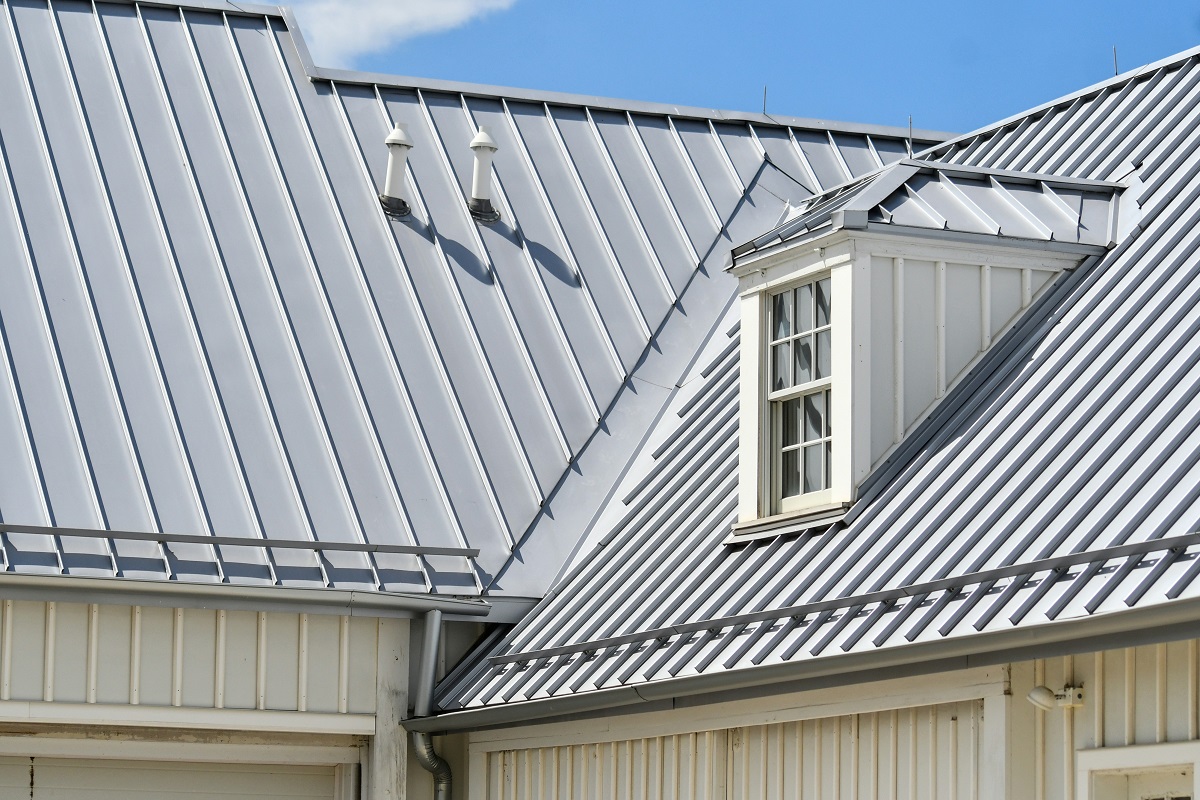
- Impact resistance. Many metal panels carry a Class 4 rating under the UL 2218 test, which simulates hail strikes with steel balls. Roofs that pass are far less likely to puncture or leak after a hailstorm, which means fewer full replacement claims.
- Wind performance. Interlocking panels and concealed fasteners, when installed correctly, resist uplift better than many lighter roofing products. Roofs that stay attached avoid the cascading water damage that follows a breach.
- Fire resistance. Metal is non-combustible, and many systems earn a Class A fire rating. This helps in wildfire-prone regions where windblown embers land on roofs and in ordinary house fires that reach the roof deck.
- Longevity. A roof designed to last decades gives the insurer a more predictable risk profile than a product that degrades quickly under repeated hail exposure.
The point of these features is not that metal never gets damaged. Large hail can still dent panels, and falling limbs or flying debris can still puncture them. The point is that the odds of a large, expensive roof claim fall meaningfully, and insurers translate that into a credit where their rating plans allow it.
When a Metal Roof May Not Lower Your Premium
It would be misleading to promise savings in every case. There are several common situations where a metal roof does little for your bill, or where the benefit comes with strings attached.
Cosmetic damage exclusions
Some insurers grant an impact-resistant roof credit only if the policy excludes cosmetic hail damage. This means dents that do not affect function would not be covered. For some homeowners, especially those with standing seam panels in a visible location, that tradeoff matters. Read the endorsement before you accept the credit.
Percentage-based wind and hail deductibles
In many storm-prone areas, wind and hail claims carry a separate deductible calculated as a percentage of the insured value of the home rather than a flat dollar amount. A new roof will not change that structure. You might get a smaller premium and still face a large out-of-pocket amount after a storm.
Roof payment schedules
Some policies pay only a portion of roof replacement cost based on age and material. A newer, durable metal roof can improve your position under these schedules, but it depends on how your carrier writes them.
Carrier appetite
In certain high-loss markets, insurers have been tightening underwriting, raising base rates, or limiting new policies. A discount applied to a rising base rate may simply slow an increase instead of producing a visible drop.
Underlying home factors
Your claims history, credit-based insurance score where permitted, distance to fire services, and the age of your wiring and plumbing all influence price. A new roof is one lever among many.
The Interlock article makes the same underlying point in its own words: a rated metal roof reduces risk, but a discount is never guaranteed. That is the correct way to frame it.
Ratings and Documentation Insurers Want to See
Insurers do not take a homeowner’s word that a roof is impact resistant. They want proof, and the proof is usually a product rating plus installation records. Missing paperwork is one of the most common reasons a qualified roof fails to produce a discount.
Typical items to gather include:
- UL 2218 Class 4 certification for the specific panel and profile installed. Class 4 is the highest tier of the impact test, and it is the rating most hail-region carriers reference.
- Fire classification, such as Class A, noted on the product data sheet.
- Wind uplift or wind resistance ratings from the manufacturer, particularly if you live in a hurricane or tornado corridor.
- A final inspection report or installer certificate confirming that the system was put in according to manufacturer specifications.
- Photos of the completed roof, including underlayment and fastening details if the carrier asks.
- The insurer’s own impact-resistant roof form, if it has one, completed and submitted with the documentation.
Ask your agent which documents the carrier accepts, because requirements differ. Some insurers will update your policy after receiving the certificate, while others apply the credit only at renewal, so timing can affect when savings begin.
Running the Numbers: Does the Discount Justify the Cost?
A metal roof usually costs more to install than asphalt shingles, so it is reasonable to ask whether insurance savings can carry the investment. The honest answer is that they rarely do alone, but they can improve the overall math.
Consider a hypothetical example. This is an illustration, not a quote or a forecast. Suppose your annual homeowners premium is $3,600:
- At the low end of the commonly reported range, a 5% credit saves $180 per year.
- At the high end, a 35% credit saves $1,260 per year.
- If the credit applies only to a wind and hail component of, say, $1,200, a 20% credit on that portion saves $240 per year.
Those results span a huge range, which is why you should get a written figure from your own insurer before you sign a roofing contract. Over a 30-year period, even modest annual savings add up, but they seldom cover the price premium on their own.
The stronger financial case combines several effects:
- Avoided claims. A roof that survives a storm intact means no deductible, no claim on your record, and no disruption while repairs are made.
- Fewer replacements. Metal systems are designed to last far longer than typical shingles, so you may skip one or more full replacement cycles.
- Insurability. In regions where carriers are pulling back, a durable roof can make your home easier to place and easier to renew.
- Resale appeal. Buyers in storm country notice roof ratings, and a documented Class 4 system can ease underwriting for the next owner.
If the only reason to choose metal is a projected premium reduction, you may be disappointed. If you see the discount as one benefit among several, the investment looks more balanced.
Home Upgrades That Complement a New Roof
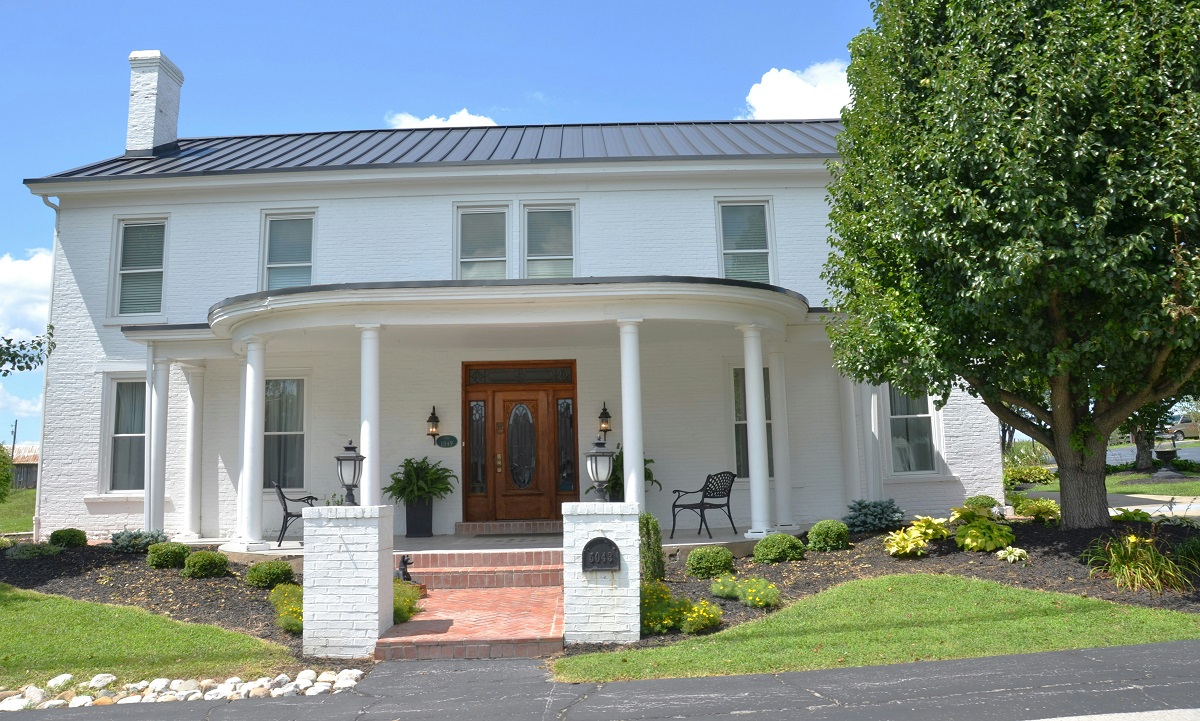
A roof is the headline project, but it is not the only improvement that can influence your premium. If your goal is to reduce long-term insurance costs, it helps to think about home upgrades that help lower your insurance rates as a package rather than a single purchase. Several carriers reward a combination of improvements because each one addresses a different loss pathway.
Worth discussing with your agent:
- Roof-to-wall connections. Hurricane straps or clips that anchor the roof framing to the walls reduce the chance of the roof lifting off in high winds.
- Impact-rated windows or shutters. Broken windows allow wind and rain inside, which can lead to internal pressure that damages the roof from below.
- Upgraded garage doors. Garage doors are a common weak point in wind events, and reinforced models help.
- Water leak detection and automatic shutoff devices. These reduce water damage claims, which are among the most frequent in any region.
- Monitored smoke, burglary, and fire alarms. Many carriers offer small credits for central station monitoring.
- Updated electrical and plumbing systems. Older systems raise fire and water risk, and insurers often price accordingly.
Ask your carrier for its complete list of mitigation credits. You may find that a bundle of smaller upgrades, together with the roof, produces a larger combined reduction than the roof alone.
Steps to Take Before You Sign a Roofing Contract
Because discounts vary so much, the best approach is to verify before you spend. A short checklist can prevent surprises.
- Call your insurer or agent first. Ask whether the carrier offers an impact-resistant or Class 4 roof credit, how much it is, and whether it applies to the full premium or just the wind and hail portion.
- Ask about conditions. Find out whether a cosmetic damage exclusion is required, whether the credit changes your wind and hail deductible, and whether the carrier applies it midterm or at renewal.
- Request quotes from more than one carrier. If your current insurer offers little, another may place a higher value on a metal roof. Compare the total cost after credits, not the credit alone.
- Choose a rated product. Confirm that the exact panel and system you are buying carries the Class 4 certification your carrier recognizes, and ask the contractor to supply the documents.
- Hire a qualified installer. A top-tier product installed poorly can fail in wind and may lead to disputes. Ask about manufacturer-certified installation and warranty terms.
- Keep a file. Store certificates, inspection reports, photos, and the final invoice so you can submit them quickly and defend your coverage later.
- Review your policy after installation. Confirm that the credit appears on your declarations page and that coverage terms match what you were told.
Common Questions About Metal Roofs and Insurance
Does every insurer offer a discount for metal roofs? No. Availability varies by company and state. Some provide a specific impact-resistant roof credit, while others fold roof quality into their general pricing or offer nothing.
Is a metal roof the same as an impact-resistant roof? Not necessarily. Metal is a material category, while impact resistance is a tested rating. Insurers generally look for the rating, not simply the material.
Will my deductible go down? Usually not. The credit applies to the premium, while your deductible is set by the policy. Check whether your wind and hail deductible is a percentage of insured value.
Can a dented metal roof still be covered? That depends on the policy. If you accepted a cosmetic damage exclusion in return for the discount, dents that do not affect performance may not be covered.
Does a quieter storm year mean I should wait? The 2026 Aon figures show that losses were lower than in recent years but still very large. Storm risk is variable from season to season, so timing a roof purchase around national averages is not a reliable strategy.
The Bottom Line
In areas prone to severe storms, a metal roof can lower your homeowners insurance cost, but the result is conditional. The two 2026 data points tell a consistent story. Aon’s first-half findings show that severe convective storms remain the costliest insured peril, with roughly $27 billion in U.S. losses in six months, which explains why carriers value any feature that reduces roof claims. Interlock’s mid-2026 guide shows that the resulting discounts commonly span roughly 5% to 35%, with the final figure controlled by your insurer, your state, and how the credit is applied.
The practical conclusion is to treat the discount as likely but unconfirmed until your own carrier puts it in writing. Verify the credit, confirm the rating and paperwork requirements, check how your deductible works, and compare the total cost across insurers. If the numbers work, a metal roof offers a rare combination of lower risk, longer service life, and potential premium relief. If they do not, you will have learned that before spending a dollar on materials.